Cabinet lock sample approval should establish whether a specific hardware configuration fits your enclosure and whether the configuration can be identified again when you order. For industrial cabinet OEM purchasing and engineering teams in the United States and Europe, a useful approval record connects the sample, the drawing revision and the agreed purchase specification. A good-looking sample alone is not a production release.
Define the approval basis before the sample arrives
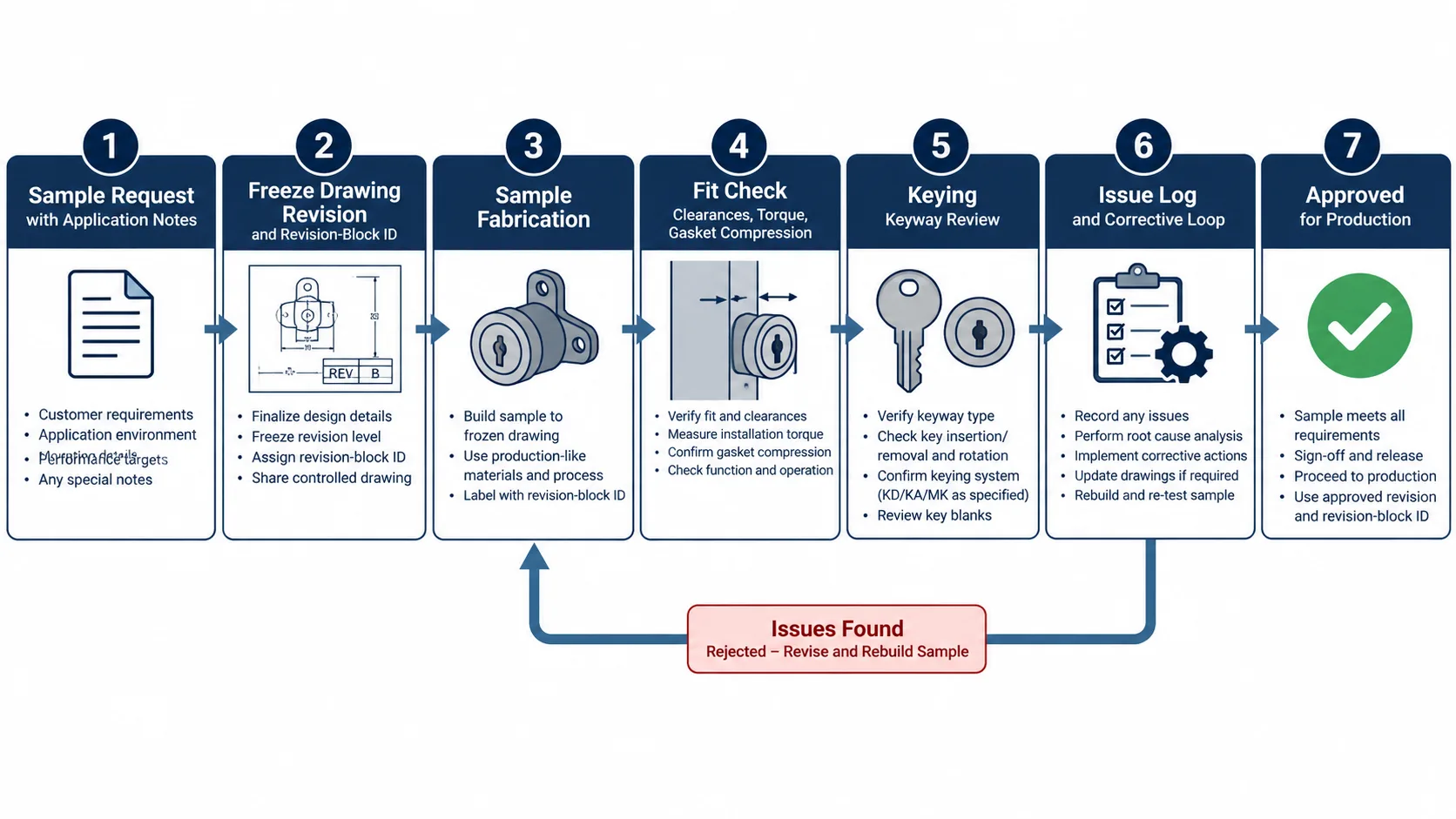
Ask both teams to identify the part reference, drawing revision, required accessories and intended enclosure. Record which requirements are mandatory and which remain open. Separate a dimensional fit review from environmental or endurance testing: checking a sample on a door does not establish a certified performance rating.
Our OEM cabinet lock RFQ checklist covers the information to request before quotation. This guide addresses the next decision: what to record when a sample is assessed and how to prevent an unapproved change from reaching a purchase order.
Check fit on the intended door and frame
- Compare the sample and supplied drawing with the actual mounting cutout. Note any interference rather than enlarging the cutout without recording the change.
- Check mounting engagement on the intended panel construction, including reinforcement, coatings and any washer or mounting hardware.
- Observe cam or linkage engagement with the keeper through the complete operating movement. Record rubbing, incomplete engagement or interference.
- Check the space needed to operate the handle or tool and open the door. Include nearby panels and service access in the review.
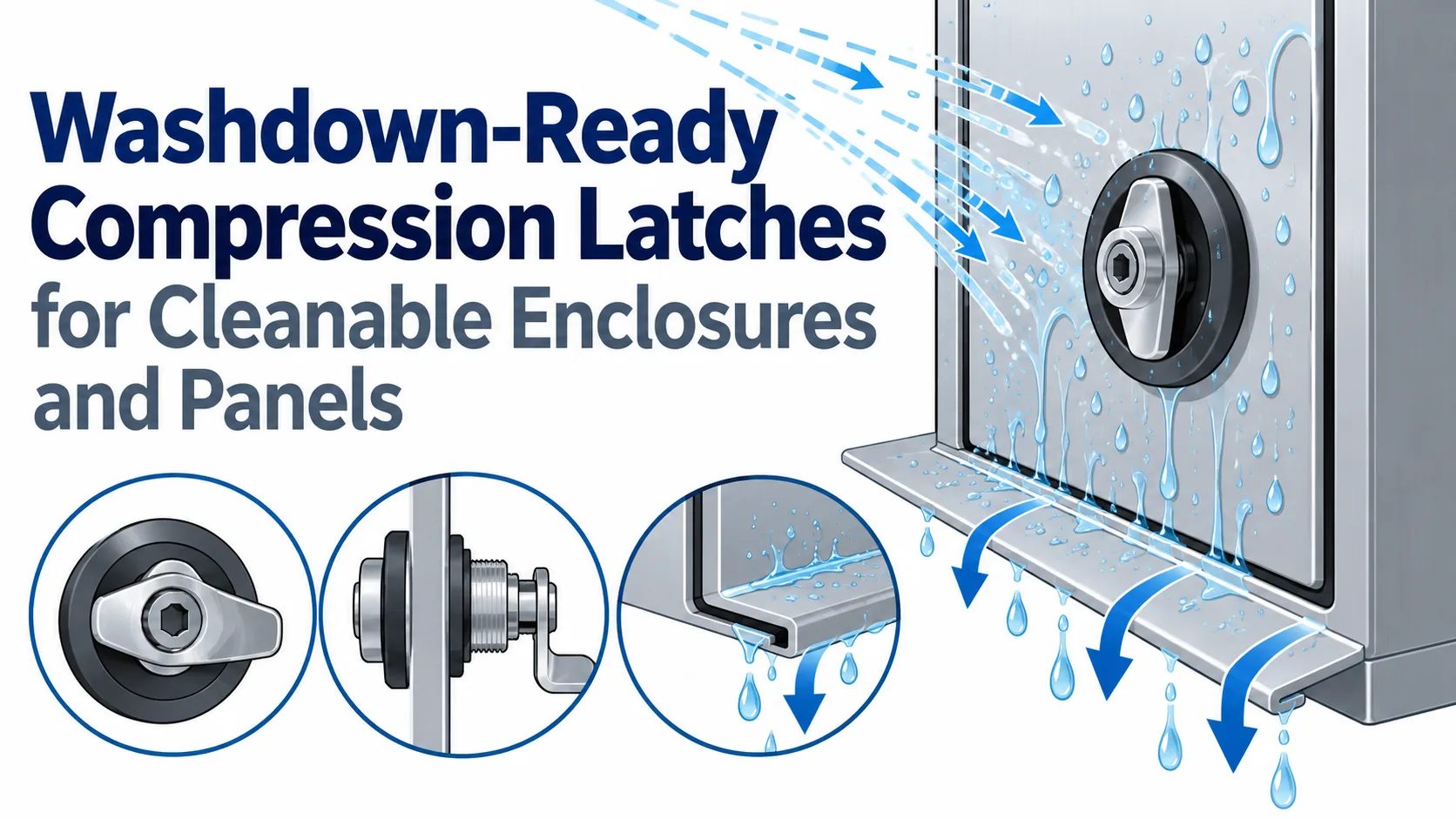
- If a gasket is present, document the closing behavior separately. Obtain the required engineering assessment rather than inferring sealing performance from latch feel.
Record the enclosure or fixture used for the assessment. If it differs from production geometry, list the differences as limitations of the approval. A successful bench demonstration should not be recorded as a fit check on a production enclosure.
Compare configurations, not just product photographs
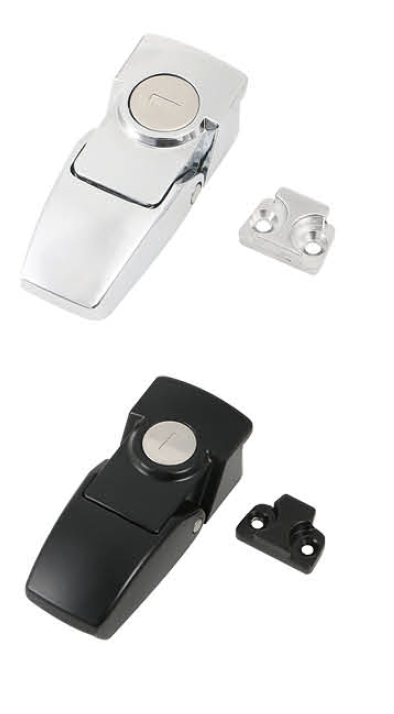
A purchasing comparison should identify the operating function, cam or linkage arrangement, supplied accessories and keying requirement. Two visually similar samples may not represent the same orderable configuration. Request clarification whenever the quotation, sample label and drawing disagree.
For product references, review the FS2173 product page and FS7712 product page. These links are starting points for a drawing review, not a statement that the two products are interchangeable or approved for your enclosure.
Keep a revision and issue log
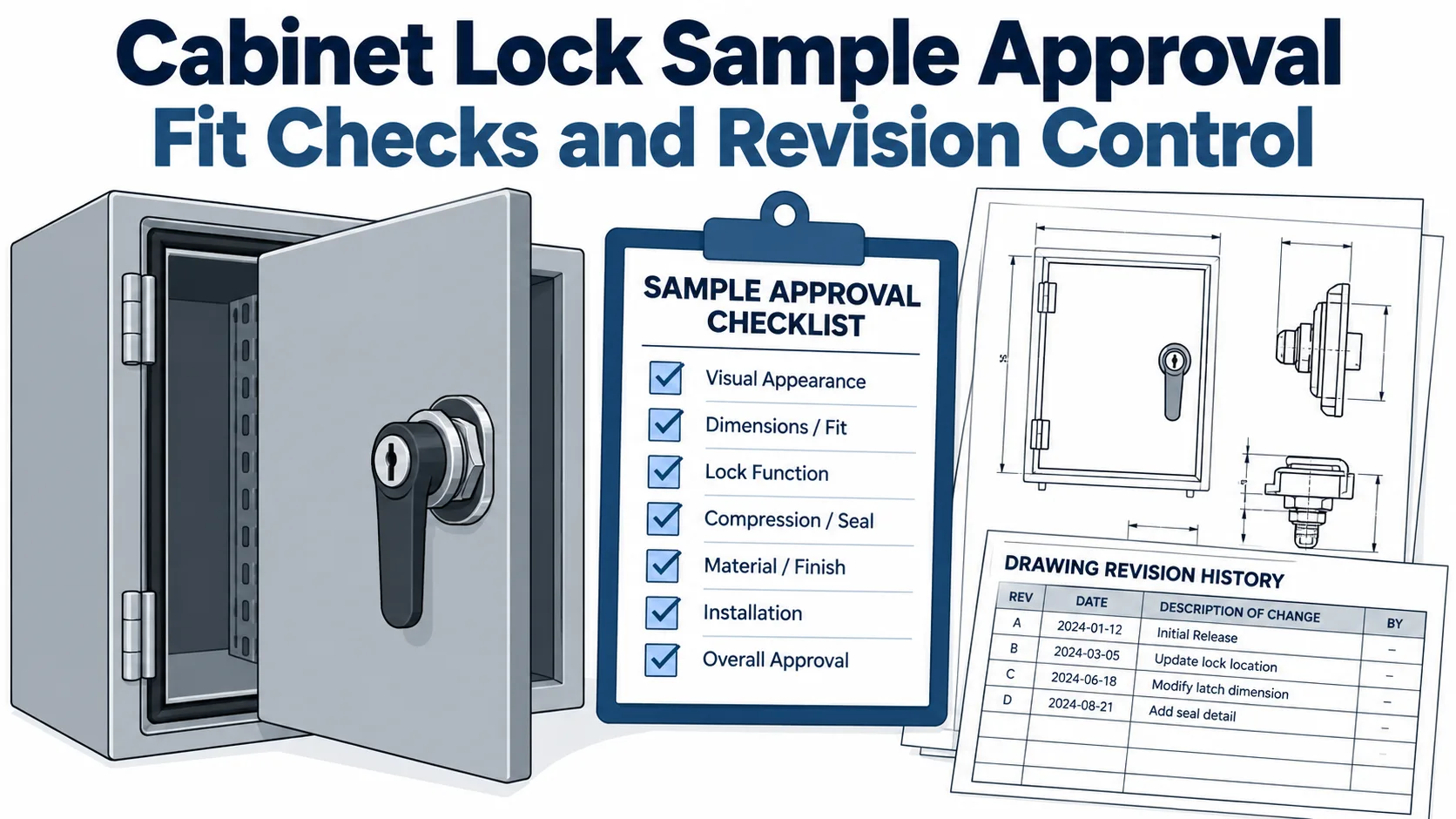
Use an approval record containing the sample reference, drawing revision, enclosure reference, reviewer, review date, observed issues and disposition. Mark an item as accepted, rejected or awaiting clarification against the agreed requirement. Do not convert an unresolved issue into an approval simply because a delivery date is approaching.
If a supplier proposes a different cam, finish, mounting component or keying arrangement after review, request an updated configuration reference and assess the affected checks again. Attach the agreed revision to the purchase order so that purchasing and engineering use the same acceptance basis. Retain the approval record and photographs with the order rather than relying on an email subject line.
Buyer questions
Does sample approval establish an IP rating?
No. A fit and operation review is not evidence of an enclosure IP rating. Where a rating is required, request applicable model-specific evidence and confirm the complete enclosure requirements with your engineering team.
Can purchasing approve the sample without the drawing revision?
An unidentified configuration creates ambiguity for repeat orders. Ask for a traceable reference and record any missing documentation as an open item before production release.
What should be sent when a sample does not fit?
Send the sample reference, drawing revision, photographs of the interference and the relevant enclosure measurements. State the observed issue and the required outcome; do not assume that a modification is feasible until it has been reviewed.
Request a configuration review
Send your cabinet application, drawing revision, sample findings, required quantities and destination country through the BTLatch RFQ contact form. Include unresolved fit or documentation questions so the quotation discussion can address the configuration you actually need. Do not send confidential end-customer details unless sharing them is authorized.