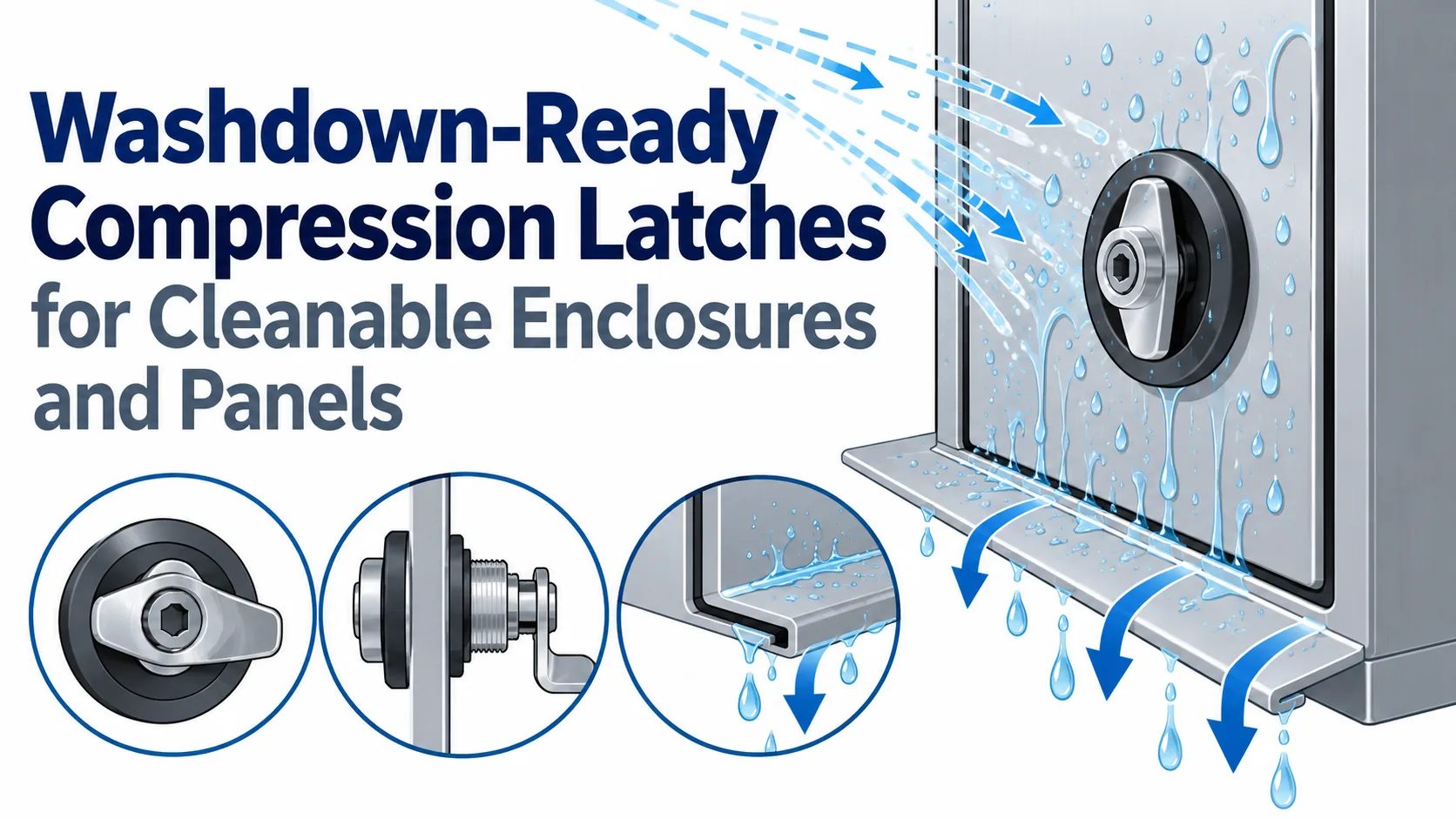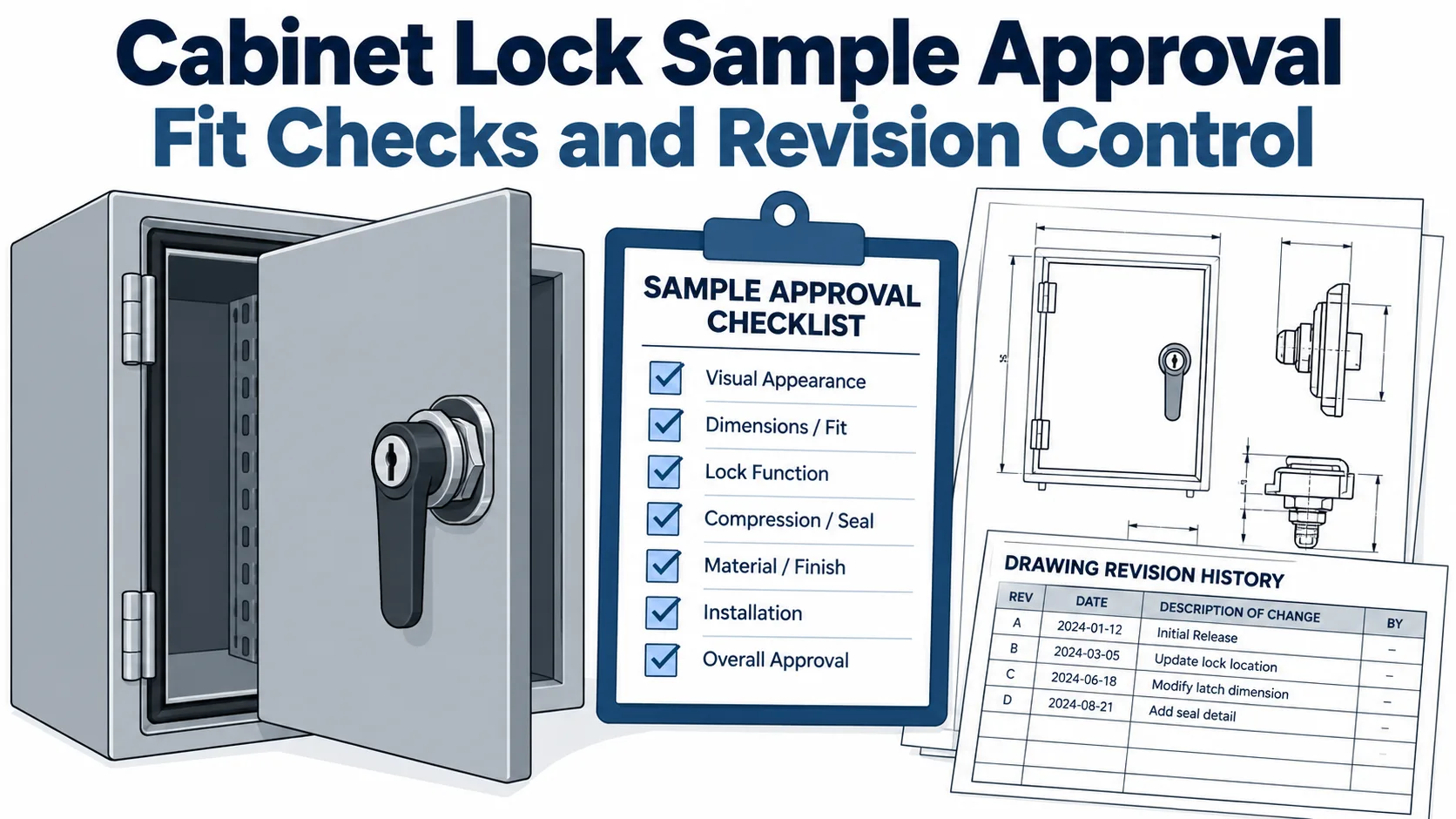
When a door opens for service and the surrounding area is washed down on a schedule, the latch is part of the cleaning problem, not just the access problem. A compression latch in a washdown zone has to keep working while resisting moisture, cleaning agents, trapped debris and the physical action of high-pressure spray. This guide is for OEM and panel-building teams in food processing, dairies, beverage, pharmaceuticals and other wet-processing environments who specify enclosure hardware for the United States and Europe. It focuses on what to require from a supplier and what to verify yourself, so that a quotation is not mistaken for a washdown rating.
Washdown service is not the same as sealing
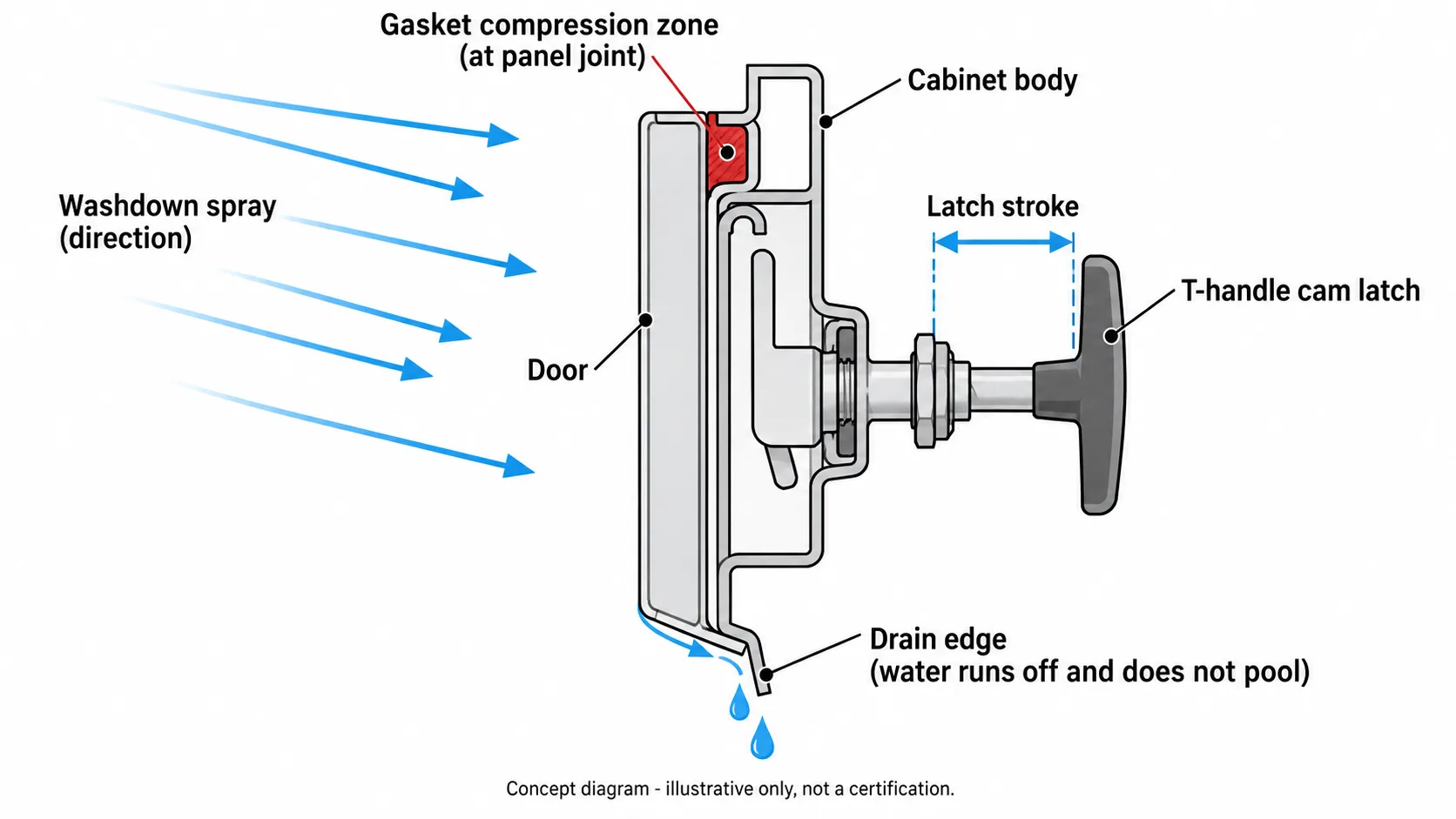
Buyers sometimes assume that because an enclosure has a gasket, the latch must seal it. They are different functions. The gasket closes the gap between door and body; the latch keeps the door closed and holds the gasket under compression when the assembly is exposed to spray. A latch that feels secure on a dry bench tells you little about how it behaves after repeated washing. It does not prove that the enclosure maintains its design protection level, and it does not certify the assembly. When a specification calls for washdown service, the requirement belongs to the enclosure as a whole, and the latch is one of the components that has to cooperate with it.
For a specification you write, decide what you can actually evidence: which enclosure, which panel construction, which gasket, which wash regime. Then ask the supplier how the latch contributes to that requirement and what support is available. Do not convert a generic compression latch into a washdown component by changing one line of a drawing. The change belongs to the enclosure design, and it should be recorded as such.
Material and finish choices for wet service
Finish quality matters in washdown zones because the surface is what the cleaning process actually touches. In wet environments, a coating that stays bonded and does not chip or lift at the panel joint is usually preferred over a cheap finish that looks clean today and fails next month. When you compare two visually similar latches, the finish can be the deciding factor even if the operating parts are nearly identical. Ask the supplier how the finish is applied, how it is protected at the edges, and which cleaning agents have been used in their own tests, and keep that answer in the order file.
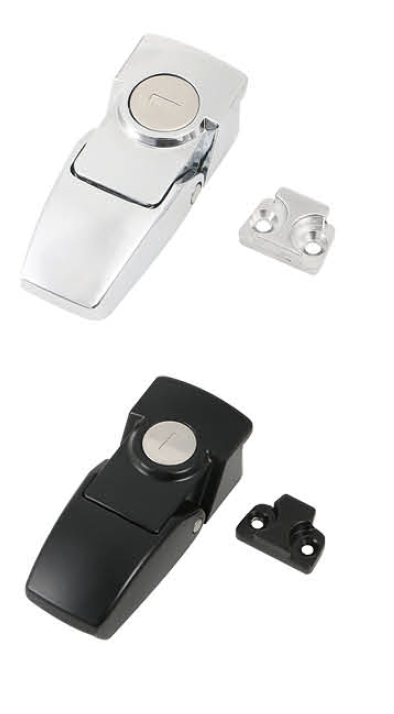
Do not infer finish durability from the material alone. The same alloy can behave very differently depending on the surface treatment and the cleaning routine. A supplier that describes its treatment, or can show a finished sample for your inspection, is in a stronger position to support a washdown use than one that only names the base metal. Our MS324-2 T-handle cam latch is a representative starting point for comparing finish and operating configuration on a real order; use it to ask about the finish you need, not as evidence that it is rated for your process.
Mounting and opening geometry
Keep water moving off the latch area
In wet service, a latch that traps standing water over its own mechanism is more likely to show corrosion at the joint than one that drains or dries quickly. When you review the door layout, check where the latch sits, whether the panel edge sheds water, and whether the door closes so that spray cannot sit directly on the operating parts. These are layout decisions that belong in the enclosure drawing, and they are easier to correct before the panel is fabricated than after it is installed.
If the door closes under its own weight, note that a latch near the bottom of a long panel can be the most exposed part of the assembly. Consider whether the operating handle can be reached without forcing the operator into a position where spray collects. The choice is a usability decision as much as a durability one, and it should be made with the person who will open the door, not only with the person who buys the latch.
Check the operating gap and clearance
A compression latch pulls the door closed against the gasket with a defined travel. If the gap between door and body changes across the panel because of thermal movement, panel flex or uneven hinge spacing, a single fixed latch may not hold the gasket evenly. When specifying for washdown, confirm with your panel engineer that the clearance at the latch is within the range the selected model is intended to work in. Record the clearance you actually need rather than a catalog value. For a broader look at matching compression latches to enclosure requirements, the compression latch selection guide is a useful reference alongside your own specification.
Buyer questions
Does a washdown-suitable latch make the enclosure washdown-ready?
No. The latch is one component of the enclosure. The gasket, panel finish, hinge layout and the cleaning regime together determine how the assembly holds up in washdown service. A supplier can describe how a latch is suited to wet environments, but the washdown rating of the finished enclosure belongs to the enclosure design and to the specification that governs it. Request model-specific evidence and confirm it against your own requirements before release.
Can I specify washdown service without naming a numeric rating?
You can describe the service: the environment, the cleaning agents, the pressure and temperature of the wash, and how the door is opened and closed. Then ask the supplier what they will test or evidence in support, and keep the answer in the order file. If a numeric rating is required by your end customer, confirm it against that specification before you place the order.
Request a specification review
Send your enclosure application, the wash regime you operate under, panel construction, gasket details, quantities and destination country through the BTLatch contact form. Include open questions about finish, mounting or operating clearance so the quotation discussion addresses the washdown requirement you actually have, not a generic latch. Do not send confidential end-customer details unless sharing them is authorized.